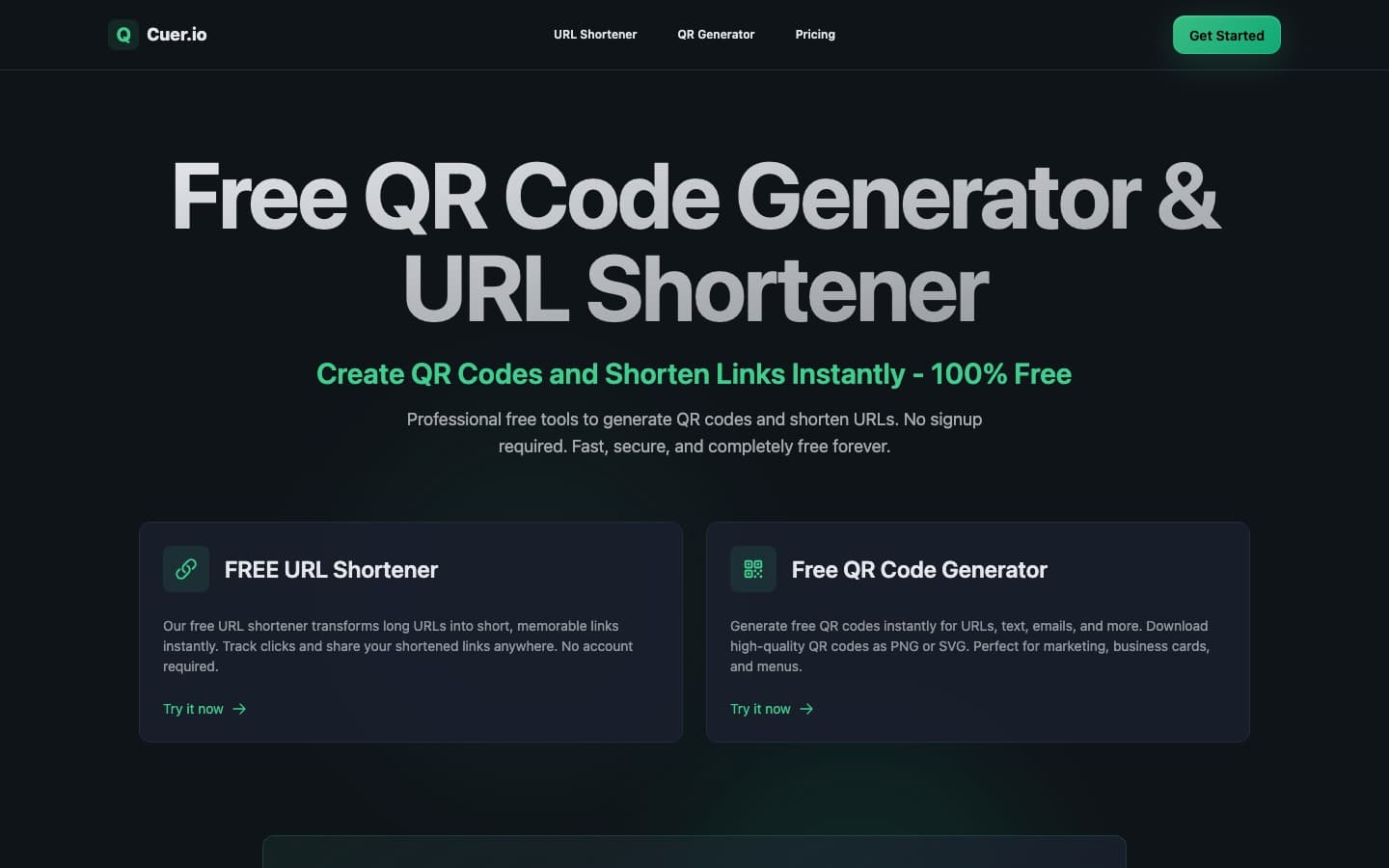
Cuer is a product we built and run ourselves: a free QR code generator and URL shortener at cuer.io, with a premium dashboard for people who need to manage and measure their links rather than just create them.
The problem
QR codes and short links are ten-second jobs that most tools have wrapped in accounts, watermarks and upsells. The people who need them (a menu, a business card, a campaign link) usually need them right now, without registering for anything. And the moment a code is printed, the next question arrives: is anyone actually scanning it?
Two tools, zero friction
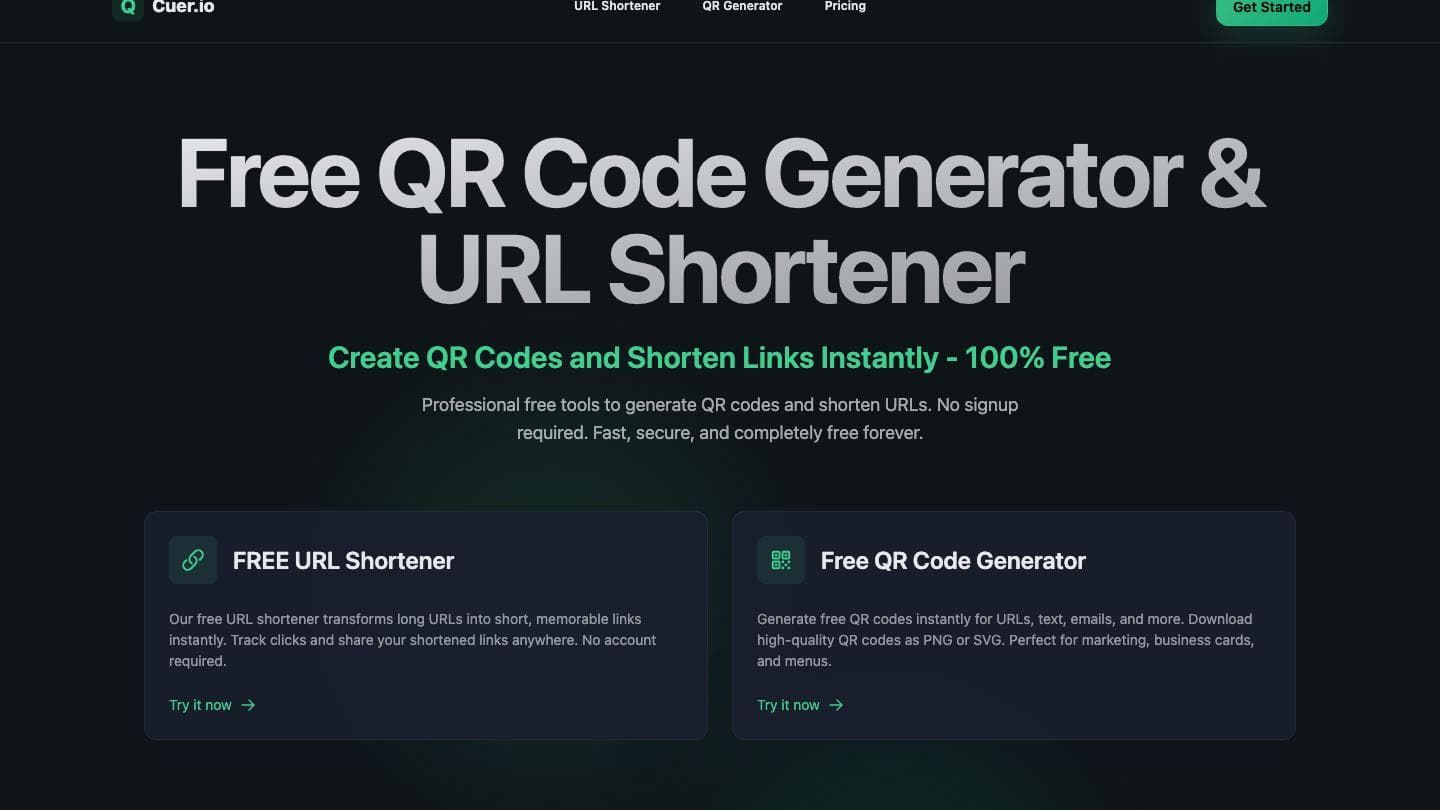
Both tools work instantly from the page, no account required. The QR generator takes URLs, plain text, phone numbers, emails and WiFi details, up to 2,000 characters, and renders the code in the browser. The shortener turns long URLs into short, memorable links with click tracking built in. No watermark, no trial clock, and everything created on the free tier keeps working forever.
A QR code in one click
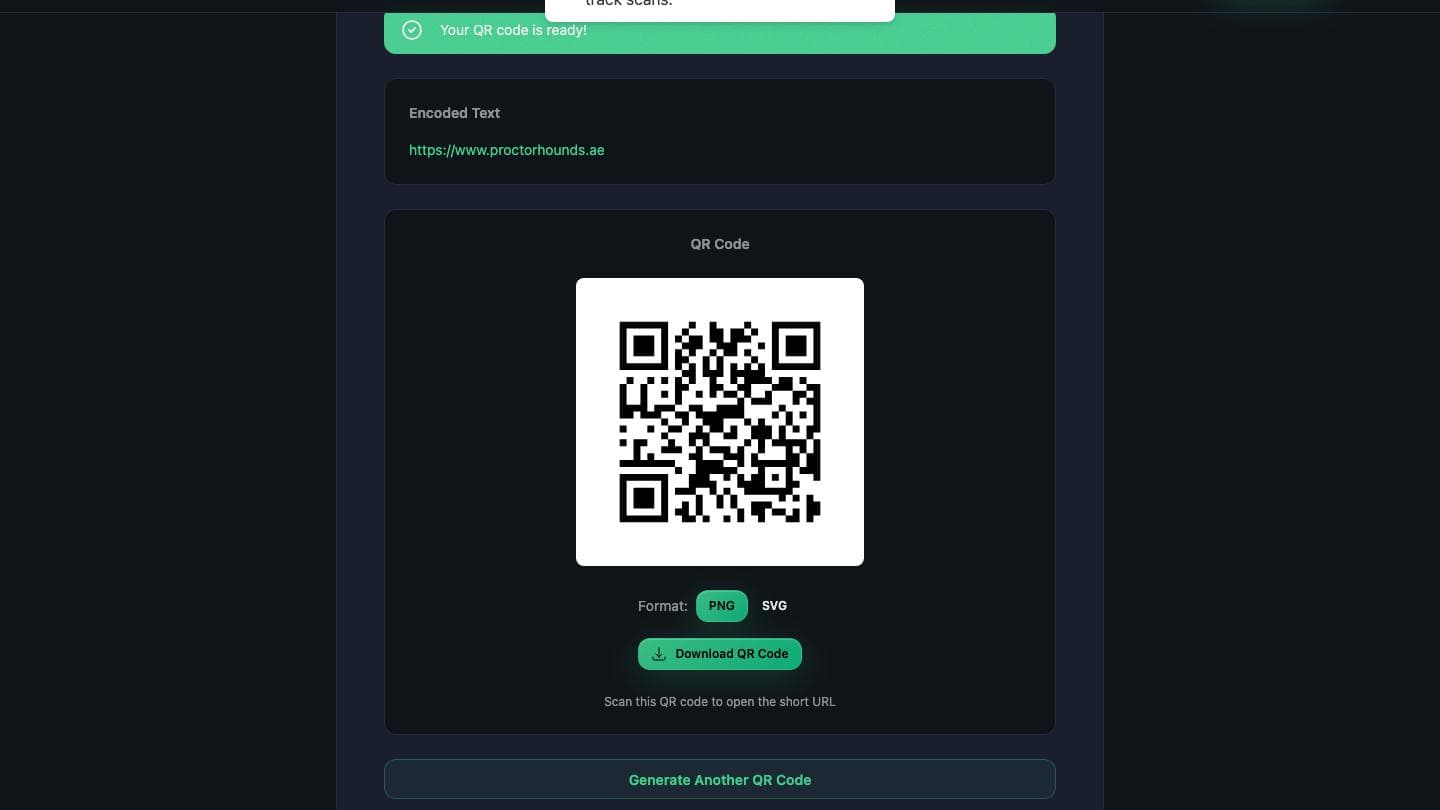
Type, generate, download. Codes export as high-resolution PNG for print or SVG for design tools, and anonymous use is genuinely anonymous. Signing in adds the layer that matters for campaigns: saved codes with scan counts and per-code tracking you can switch on or off.
The dashboard behind the free tier

The business model is one honest step: the tools are free forever, and a single Premium Dashboard plan at $7 a month adds the management layer. Every QR code and short link in one place, detailed analytics and click tracking, and unlimited assets. Sign-in is passwordless via magic link, and billing runs through Stripe.
Under the hood
Short links resolve through a server route that looks the code up in Supabase, honours link expiry, and records the click with hashed session identifiers, so analytics work without following people around. QR scans run through the same pattern: each saved code gets its own scan route with scan counts and a per-code tracking toggle. Product analytics flow into PostHog on the server side, and the marketing surface is built for search: standalone tool pages for each job with the tools embedded.
We started from a proven Next.js SaaS foundation and spent the build time on the product itself: the tools, the tracking pipeline and the dashboard, not the plumbing.
Stack: Next.js, Supabase, Stripe, PostHog, Resend, nanoid, qrcode.react, Crisp
Outcome
A live freemium product with a genuinely free core, running lean enough that free users cost close to nothing while the dashboard converts the people who need more. It is also how we prototype the commercial pattern we recommend to clients: give the utility away, charge for the management layer.